Why Every Nation Needs Its Own AI System
Truth, culture, and why intelligence infrastructure is never neutral
AI Is Not a Mirror of Reality
We often talk about AI as if it simply reflects the world back to us. Feed it enough data, clean up the noise, and truth emerges.
That framing is incomplete.
Every decision made during AI training is a decision about inclusion and exclusion. What sources are considered authoritative. Which institutions are trusted. What counts as settled knowledge versus open debate. When something is labeled “debunked,” “disputed,” or quietly ignored.
These are not technical decisions. They are cultural ones.
Facts exist. Measurements exist. Events occur whether we agree on them or not. The divergence begins one layer up—where facts are interpreted, weighted, contextualized, and granted legitimacy. Scientific consensus, legal precedent, economic models, and historical narratives all rely on shared standards that are socially constructed and culturally enforced.
AI systems must internalize those standards to function. When they do, they inherit a value system.
“Global” Models Still Reflect a Narrow Worldview
Even so-called global AI systems are not built by humanity in the abstract.
They are created by a relatively narrow demographic: highly educated, economically secure, digitally fluent, and largely insulated from physical labor and material precarity. That distance matters. It shapes assumptions about risk, stability, authority, and acceptable loss. It influences how uncertainty is tolerated, how dissent is treated, and what kinds of harm are considered significant.
This is not a moral indictment. It’s an observation about perspective.
A global model does not escape culture. It concentrates one.
Truth Is More Than Facts
Raw facts can be challenged and corrected. Higher-order truth is harder.
Determining what constitutes valid science, credible policy, reliable criminal data, or authoritative history depends on cultural standards. Some societies emphasize continuity with historical norms. Others privilege institutional authority, moral tradition, political alignment, or empirical consensus.
AI systems must encode these standards somewhere. When they do, they shape how knowledge is framed and how disagreement is resolved. Those choices ripple outward—affecting education, governance, and public trust.
To pretend otherwise is to confuse objectivity with neutrality.
Influence, Drift, and the Power of Defaults
We’ve seen this dynamic before.
American culture didn’t spread globally through force. It spread through scale, repetition, and perceived legitimacy. Hollywood normalized accents, values, and narratives. Children in other countries now absorb American speech patterns through media. Local dialects fade. Cultural reference points shift.
AI accelerates this process. When a foreign system becomes the default interface to knowledge, it quietly carries its assumptions with it. Over time, those defaults reshape how people think, speak, and judge what is reasonable.
This isn’t conspiracy. It’s influence.
Fragmentation Isn’t the Risk—Opacity Is
The usual objection is that multiple AI systems will fragment truth and undermine shared understanding.
In reality, epistemic fragmentation already exists. People already compare models. They already notice differences. They already seek perspective.
Plural systems don’t destroy shared reality. They make assumptions visible. They return validation to human judgment rather than burying it inside a single opaque authority.
That comparison—between systems, cultures, and standards—is a feature, not a flaw.
Nature’s Design Pattern: Decentralization
Nature offers a useful guide.
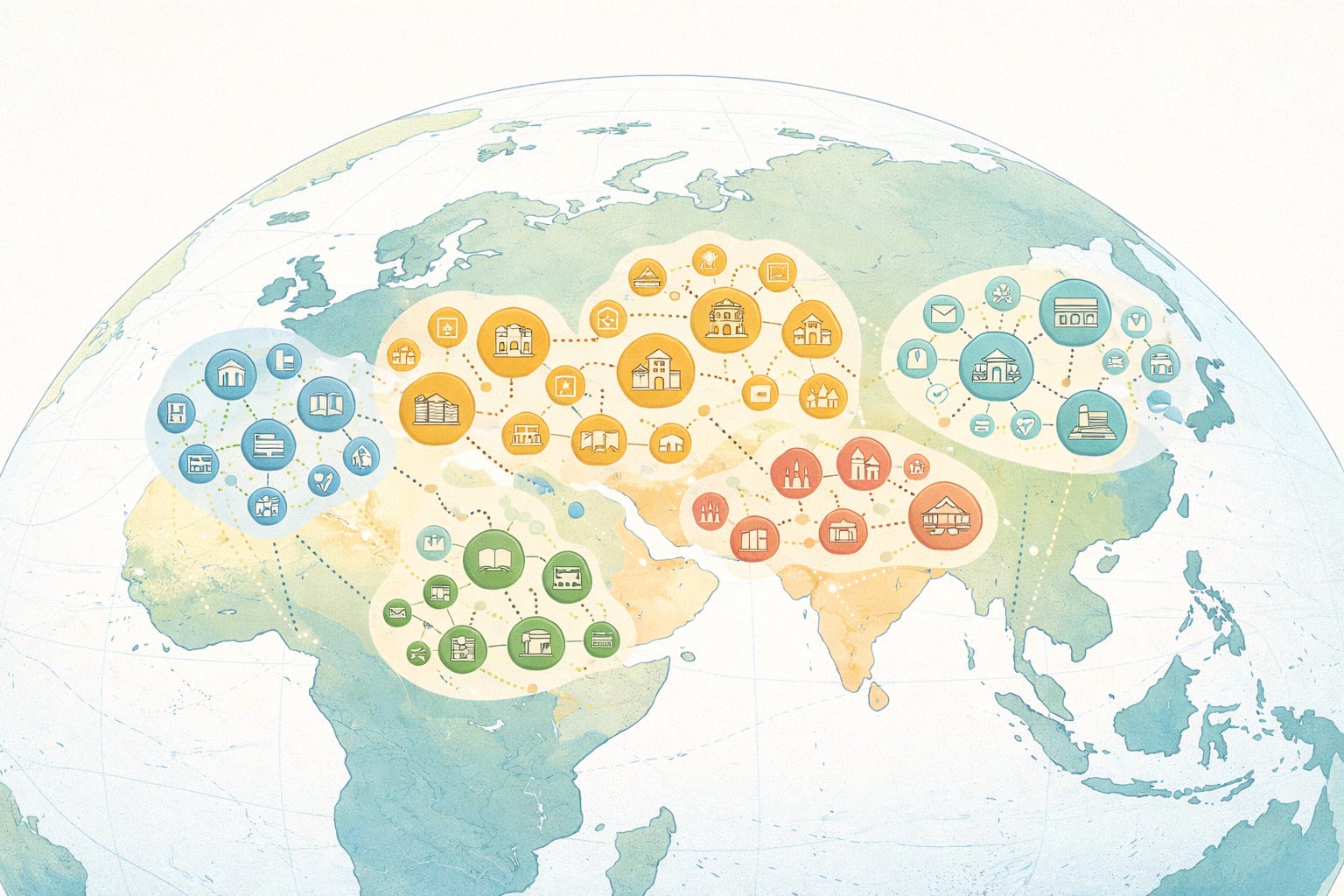
Intelligence does not consolidate itself into a single organism. It diversifies. It distributes. It adapts through variation. Centralization produces efficiency in the short term and fragility over time. Decentralization preserves resilience.
That pattern repeats across biology, ecosystems, and human institutions. Intelligence infrastructure is no different.
Sovereignty, Accountability, and Choice
National AI systems do not have to become propaganda engines. They can be transparent, accountable, and explicit about their epistemic standards. They can state whose history they center, which institutions they trust, and how they handle uncertainty.
That clarity is healthier than pretending neutrality while exporting values by default.
AI will shape how societies think, remember, and decide. The question is whether those choices remain visible and contestable—or whether they quietly consolidate under systems no one elected and few can interrogate.
Truth is not only discovered. It is governed.
And governance, by definition, belongs to people.